


School trip transportation rarely makes headlines, but it lands on the same budget spreadsheet as every other line item Arizona districts are fighting over right now. A recent investigation published by AZ Big Media, reported by Cronkite News and The Beam, laid out how far the staffing crunch has gone: Arizona’s teacher shortage has driven a private staffing boom, with districts signing contracts with staffing agencies to keep classrooms covered. When payroll gets that tight, everything discretionary gets a second look — and field trips are usually first on the list.
That’s the wrong place to cut, and it doesn’t have to be the outcome. From Phoenix to Tucson, districts that treat school trip transportation as a planned, quoted, all-inclusive expense instead of an unpredictable internal cost are the ones still running field trips, competitions and college visits. Gray Line Tours & Bus Rentals has spent more than 109 years moving Arizona groups, and the pattern we see every spring is consistent: the districts that book early and budget precisely are the ones whose trips survive the budget meeting.
What The Staffing Numbers Actually Say
The reporting is worth reading in full, but the headline figures set the context for every transportation conversation happening in Arizona schools this year:
- More than 8,500 educators left Arizona public schools between the last two academic years, roughly 14% of the workforce.
- The Arizona Department of Education counted 4,379 vacancies in October 2025, with Maricopa County districts accounting for the largest share.
- Districts turned to contracted agency staff to cover hundreds of full-time-equivalent positions because standard hiring couldn’t close the gap.
- In one Tucson example, the district was billed a flat hourly rate that worked out to roughly $78,000 per contracted teacher per year — more than the fully loaded cost of a direct hire.
None of that is a transportation problem. But all of it shapes the environment transportation directors and principals are working in. When contracted staffing eats into a general fund, every other request needs to justify itself with a clean number.
Why Field Trips Get Cut First — And Why That’s Backward
Field trips are easy to cancel because nobody’s contract depends on them. They’re also one of the few school activities that reliably connect classroom material to something students can see, touch, and remember. The U.S. Department of Education’s National Center for Education Statistics tracks how instructional experiences vary between districts, and the gap in out-of-classroom learning tends to widen fastest in exactly the districts already under staffing strain.
The practical answer isn’t to defend field trips on principle. It’s to make them cheap to approve — which means removing the cost uncertainty that makes an administrator nervous about signing off.
The Hidden Costs Of In-House Trip Transportation
A district-run bus looks free because it’s already on the lot. It usually isn’t. The real cost of running a trip on internal equipment includes:
- Driver overtime, especially for trips that run past the regular route window
- Pulling a driver off a morning or afternoon route, which creates a second coverage problem
- Fuel, maintenance and mileage on aging vehicles
- Substitute coverage when staff travel with the group
- Administrative time spent coordinating multiple vehicles and departure points
Every one of those is a variable. Variables are what kill trip approvals. A single quoted charter figure is a fixed number an administrator can drop into a budget request and defend.
What A Charter Quote Should Include
When you request pricing for charter bus rentals for school trips, the quote should be all-inclusive and specific. Ask for:
- Driver gratuity stated up front, not added later
- Any fuel surcharge spelled out
- Destination parking and entry fees for the vehicle
- Overnight driver accommodation for multi-day trips
- Written confirmation of exactly what’s covered
If a quote leaves those open, it isn’t a budget number — it’s an estimate that will change. Transparent pricing is the entire point of outsourcing the trip.
Safety Standards Districts Should Verify
Charter operators running interstate trips fall under federal oversight. The Federal Motor Carrier Safety Administration sets hours-of-service limits for passenger-carrying drivers, which cap driving and on-duty time and directly affect how a long trip has to be scheduled. Before booking, confirm the operator’s:
- Active USDOT and motor carrier authority
- Driver background check and ongoing training program
- Vehicle maintenance and inspection schedule
- Full commercial insurance coverage
- GPS tracking and driver communication systems
A reputable operator will hand these over without hesitation. One that hesitates has told you something useful.
Consolidation Is Where The Real Savings Live
The cheapest trip is the one that moves the most students per vehicle. Districts under budget pressure often find savings not by cancelling trips but by restructuring them:
- Combine two class sections into a single 56-passenger coach instead of running two smaller vehicles
- Schedule grade-level trips on the same day to share a departure window
- Pair an athletic event with a nearby educational stop on one booking
- Coordinate with a neighboring school on shared destinations
One departure, one driver, one arrival time. Fewer moving parts also means fewer staff pulled away from other duties — which matters more than usual when your building is already short-handed.
Staff Travel Is Its Own Problem Worth Solving
The staffing story has a second transportation dimension that gets overlooked. Districts running professional development days, multi-campus training or recruiting events are moving adults, not students — and a full coach is often the wrong tool. Smaller shuttle rentals across Arizona handle 10 to 25 staff efficiently for campus-to-campus travel, conference transport and district-wide training days without the cost of a full-size vehicle.
Book Before The Spring Crunch
Arizona’s field trip season concentrates hard in a few weeks each spring, and availability tightens well before that. Districts that lock in dates early get both the vehicle they wanted and a quote they can build a budget around. Late bookings get whatever’s left, at whatever the market rate is that week.
A workable timeline looks like this:
- Define the trip purpose, destination, and total headcount including chaperones
- Note any accessibility needs so the right vehicle is assigned
- Set departure and return times with buffer built in
- Request a written, all-inclusive quote
- Confirm in writing and file the number with your budget request
Trusted Local Network
Good operators tend to know other good operators. Organizations planning facility moves between campuses often work with professional moving and relocation services that handle equipment and furniture on the same timeline as staff transport. And districts building career-pathway partnerships frequently connect students with career college and trade programs that offer hands-on exposure to skilled trades — the kind of visit that pairs naturally with a chartered group trip.
Your Arizona School Trip Transportation Team
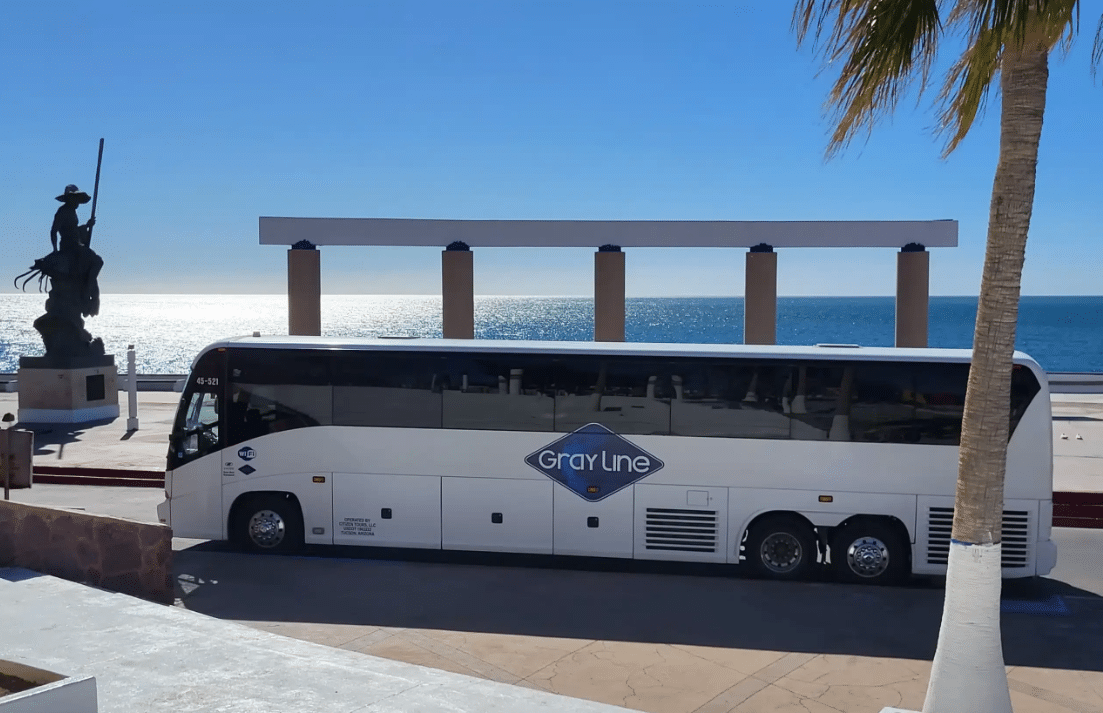
Gray Line Tours & Bus Rentals has served Arizona schools for more than 109 years across Maricopa, Pima and Pinal counties — including Phoenix, Tucson, Scottsdale, Mesa, Chandler, Tempe, Glendale, Gilbert, Marana, Oro Valley and Casa Grande. Our fleet of more than 50 vehicles covers everything from a 25-passenger group to a full 56-passenger coach, with wheelchair-accessible options so every student can travel with the class. You can read what Arizona educators say about working with us on our Google reviews, rated 4.8 stars.
Budget season is the right time to get a real number on the table. Contact our team for a transparent, all-inclusive quote on your next field trip, competition or college visit — we’re available 24 hours a day, seven days a week, and we’ll help you plan a trip that survives the budget meeting.